
The Process
Most embroidery starts at a craft store. This doesn't. The materials for each piece are sourced, salvaged, and transformed - turning what was discarded into something that commands an entire wall.
The Materials - How It Starts
-

Recycled Rope
The rope I use is made from recycled plastic. Choosing it isn't just about aesthetics - though the colour and texture speak for themselves. It's about making work that takes something the world had already written off and turning it into something worth keeping.
-

Repurposed Street Flags
The bold colours of decommissioned street banners don't disappear - they get a second life. Scrubbed clean and cut into strips, they continue to carry their vibrancy into every stitch. It's not what you'd expect to find in an embroidery studio, which is exactly the point. The colour, texture, and light-weight nature of the material is unlike anything traditional.


The Making
Each piece is made entirely by hand. No shortcuts, no machinery, just recycled materials, and an enormous amount of time.
-

The Detail
Up close, the texture is irresistible - every stitch invites touch, and the dense fibre quietly absorbs the sound around it. Step back, and the full picture emerges. Two completely different experiences of the same piece.
-

The Scale
At 10 metres long, 'Flourishing' hung above an Auckland city street. The canopy took months to complete and was made from recycled materials. Scale like this changes how people experience a space - and how they understand what embroidery can be.


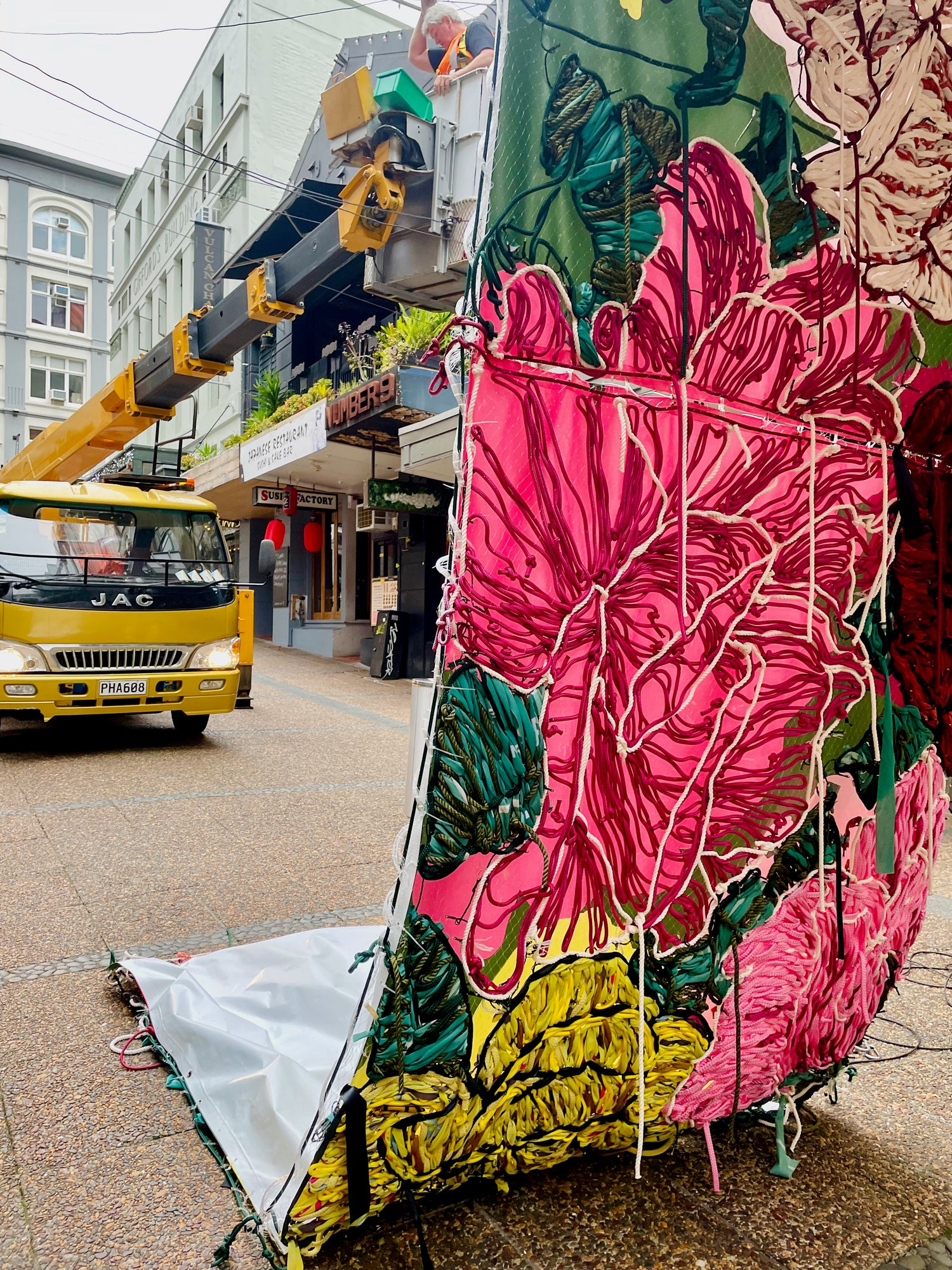
Installation in progress
Installation day means a cherry picker, steel cables, and anchor points bolted to buildings - the same infrastructure used to hang Christmas lights, now carrying something made entirely by hand. Indoors or out, every piece is designed around its final home: the ceiling height, the light, the sight-lines, the elements it will live in.
Ready to bring something extraordinary into your space?
Whether you're an architect, interior designer, or collector, a commission starts with a conversation. Every piece is made to order, made to last, and made from materials that would otherwise be lost. And because the works are made from dense fibre, they also absorb sound - making them a natural fit for large atrium spaces, hotel lobbies, and anywhere acoustics matter as much as aesthetics.
